
Table Of Contents
Keeping a hospital spotless isn’t just about appearances, it’s about protecting lives. Following clear hospital cleaning guidelines is crucial in busy NYC healthcare institutions, where every surface can affect patient safety.
Moreover, a methodical approach to cleaning helps prevent infections, guarantees regulatory compliance, and promotes a safe, welcoming environment for patients, staff, and visitors, from patient rooms to waiting areas, high-touch surfaces to difficult-to-reach corners.
This ultimate checklist covers everything hospitals need to maintain the highest levels of hygiene.
Meeting NYC Health and Safety Regulations for Hospital Cleaning
Strict hospital cleaning procedures must be followed by hospitals in New York City to comply with national and local health requirements. While OSHA regulations guarantee worker safety during cleaning and disinfection, the NYC Department of Health sets standards for waste management, sanitation, and infection prevention.
Expert services like Lazy Susans Cleaning focus on upholding these standards, making sure hospital cleaning follows all health and safety rules while keeping hygiene standards high.
See our pricing for complete healthcare cleaning services or contact us for additional information on how we can help your facility.
The Ultimate Hospital Cleaning Checklist (NYC-Focused)
For NYC hospitals, adhering to the ultimate hospital cleaning checklist provides a comprehensive guide to maintaining the highest levels of infection control and hygiene. This checklist, which covers daily, weekly, monthly, quarterly, and annual activities, guarantees that every space is regularly cleaned, from patient rooms to high-touch surfaces and difficult-to-reach areas.
Healthcare institutions can reduce infection risks, comply with local laws, and create a secure workplace for patients, employees, and guests by using these hospital cleaning guidelines.
Daily Hospital Cleaning Checklist
Hospitals must be cleaned daily to prevent the spread of illness and keep patients and employees safe. The following duties should be completed each day:
- Patient Rooms: Clean and sanitize floors, call buttons, bedside tables, and bed rails; change linens.
- Common Areas: Dust and clean seating areas, corridors, and waiting rooms. Make sure the garbage cans are emptied and sanitized.
- Restrooms: Sanitize and clean the floors, sinks, toilets, and faucets. Restock soap, paper towels, and toilet paper.
- High-Touch Surfaces: Clean elevator buttons, light switches, handrails, and doorknobs at least twice a day.
- Medical Equipment: Follow hospital procedures to clean and disinfect shared devices and equipment.
Patient Rooms – Daily Tasks
To prevent infections and maintain a healthy environment, daily cleaning of patient rooms is an essential component of hospital cleaning procedures. Important tasks consist of:
- Sanitize Surfaces: Clean countertops, chairs, and medical furniture to remove bacteria and maintain hygiene.
- Empty Trash and Biohazard Bins: Properly dispose of waste to prevent cross-contamination.
- Floor Cleaning: Sweep and mop floors with hospital-approved disinfectants to remove dirt and pathogens.
- Check Supplies: Replenish essential items like hand sanitizer, tissues, and PPE to support ongoing infection control.
Waiting Areas & Reception – Daily Tasks
To prevent infections and create a friendly atmosphere, waiting rooms and reception areas must be kept clean. Essential everyday duties consist of:
- Clean Seating: To reduce the spread of germs, clean couches, armrests, and chairs regularly.
- Clean Floors: Use hospital-approved disinfectants to sweep, vacuum, and mop.
- Clean High-Touch Surfaces: Clean door handles, handrails, counters, and reception desks.
- Organize and Sanitize Materials: To prevent contamination, clean or dispose of pamphlets, periodicals, and other shared items.
- Empty Trash Bins: To preserve hygiene, properly dispose of waste, and disinfect bins.
A key component of expert cleaning services in a hospital is performing these duties regularly, ensuring a clean and safe environment for both patients and employees.
Restrooms & Common Areas – Daily Tasks
To maintain hygiene and prevent the spread of illness in hospitals, daily cleaning of restrooms and common areas is essential. Crucial duties include:
- Clean Sinks and Toilets: Clean all surfaces, including worktops, faucets, flush handles, and toilet seats.
- Clean Floors: Remove debris and pathogens by sweeping and mopping floors with disinfectants
- Restock Supplies: Make sure you have enough soap, paper towels, toilet paper, and hand sanitizer every day.
.webp)
Weekly Hospital Cleaning Checklist
A weekly hospital cleaning checklist focuses on tasks beyond daily maintenance to ensure a consistently hygienic environment. Implementing these routines ensures that all areas are thoroughly cleaned and infection risks are reduced. Following a detailed healthcare facility cleaning schedule helps hospitals maintain safety and regulatory standards.
Weekly Hospital Cleaning Tasks:
- Dusting and wiping all surfaces, including walls and partitions.
- Deep cleaning patient rooms, including under beds and behind furniture.
- Deep disinfecting high-touch areas such as door handles, light switches, and handrails.
- Sanitizing medical equipment and shared devices.
- Cleaning and disinfecting floors with hospital-approved solutions.
- Thoroughly checking and cleaning sinks, faucets, and bathrooms.
- Complete sanitization or, better yet, replace trash bins and waste disposal areas.
- Washing window sills, blinds, and vents to remove dust and pathogens.
Deep Disinfection of High-Touch Surfaces
Because high-touch surfaces, such as elevator buttons, handrails, door handles, and light switches, are often touched by employees, patients, and guests, regular deep disinfection of these areas is essential in hospitals. Regular cleaning and disinfection of these surfaces helps keep everyone in the facility safe and hygienic by drastically reducing the spread of germs.
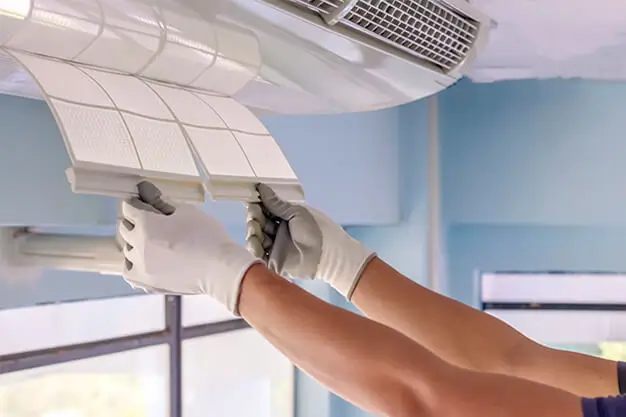
Air Vents & Hard-to-Reach Areas
Over time, dust, debris, and harmful germs can accumulate in air vents, ducts, and other hard-to-reach areas. Failing to clean these areas may lead to the spread of diseases throughout the hospital. Maintaining high air quality, reducing the risk of airborne illnesses, and improving the atmosphere for patients and employees all depend on routine cleaning of these areas.
Monthly Hospital Cleaning Checklist
To maintain long-term hygiene and compliance, a monthly healthcare cleaning checklist emphasizes deep cleaning tasks beyond daily and weekly routines. These planned processes help address high-use areas, accumulation, and hidden dirt that might be missed during regular cleaning.
Hospitals can maintain hygienic conditions, reduce infection risk, and continuously follow healthcare safety regulations by using a comprehensive healthcare cleaning checklist.
Full Surface & Equipment Sanitization
All touchpoints, such as bed rails, tables, monitors, and medical equipment, must be completely disinfected as part of full surface and equipment sanitization. This procedure eliminates bacteria and reduces the possibility of patient cross-contamination. Regular healthcare facility cleaning of these areas is essential to maintain a safe, hygienic environment and uphold infection-control standards.
Quarterly & Annual Hospital Cleaning Tasks
Deep, thorough care that goes beyond daily, weekly, or monthly routines is the primary focus of quarterly and annual hospital cleaning activities. To examine and maintain medical equipment, these duties include cleaning air ducts, vents, ceilings, and difficult-to-reach places. By carrying out these planned cleaning duties, hospitals can maintain long-term hygiene, prevent the accumulation of toxins, and comply with health standards.
Quarterly Deep Cleaning Tasks
Hospitals' quarterly deep cleaning duties include:
- Deep cleaning and steam extraction of rugs and carpets.
- Buffing and polishing hard floors to remove buildup.
- Cleaning vents, air ducts, and ceilings to get rid of dust and pollutants.
- Completely sanitizing surgery suites, procedure rooms, and high-traffic areas.
- Examining and cleaning medical furnishings and equipment.
- Cleaning and sanitizing drapes, shutters, and other fabric surfaces.
These duties promote infection control and help maintain a consistent sanitary environment.
Annual Hospital Cleaning & Sanitation Review
To ensure that all cleaning practices, tools, and disinfection techniques remain efficient and comply with current health regulations, an annual hospital cleaning and sanitation review is crucial.
To maintain the highest levels of hygiene, prevent infections, and ensure a safe environment for patients and staff, this review identifies gaps, updates protocols, and implements improvements. Annual cleaning is not a regular part of the hospital cleaning staff’s duties, as it requires expert knowledge, techniques, and equipment. The best optimal review and results are achieved through acquiring professional hospital cleaning services.
Terminal Cleaning for Patient Rooms
After a patient leaves a room due to discharge, transfer, or isolation precautions, a thorough cleaning and disinfection procedure known as "terminal cleaning" is performed. Its goals are to eliminate harmful germs, prevent the spread of infections, and ensure the area is clean and safe for the next patient.
A crucial deep cleaning is performed after a patient's release or transfer from a room. To eliminate pathogens and reduce the risk of cross-contamination, deep clean all surfaces, tools, and high-touch areas. Patient rooms are thoroughly cleaned, infection risks are reduced, and the area is ready for the next occupant when an organized healthcare cleaning checklist is followed for this type of cleaning.
Best Practices for Effective Hospital Cleaning in NYC
Strict health regulations and high patient care standards require a systematic, well-documented approach to effective hospital cleaning in NYC. Healthcare institutions can prevent the spread of disease and maintain regulatory compliance by prioritizing high-risk areas, using hospital-grade disinfectants, and following systematic cleaning processes.
These best practices promote safe, continuous clinical operations while creating a consistently clean atmosphere that protects patients and medical personnel.
Clean From Top to Bottom
Cleaning from top to bottom keeps sanitized surfaces free of dust, debris, and germs. Hospitals minimize cross-contamination by working down from higher areas, such as shelves, vents, and light fixtures. This approach maintains consistently high standards of cleanliness across all patient care locations and promotes more effective infection control.
Move From Clean Areas to Dirty Areas
To prevent the transmission of germs, cleaning should always move from cleaner to dirtier, high-risk locations. Contamination control should begin with administrative areas and hallways, then move on to patient rooms, isolation zones, and surgical areas.
This method, which ensures infection control while preventing recontamination of previously cleaned areas, is a fundamental component of hospital cleaning procedures.
FAQs - Hospital Cleaning Guidelines
What are the protocols for hospital cleaning?
Hospital cleaning protocols follow strict infection-control guidelines, including routine disinfection of high-touch surfaces, proper segregation of waste, and the use of hospital-grade disinfectants.
What are the four steps to clean hospitals?
The four steps to clean hospitals include preparing the area with proper PPE, removing visible dirt and debris, disinfecting surfaces using hospital-grade solutions, and performing final checks to ensure hygiene standards and infection-control protocols are met.
What are the seven steps of cleaning in the hospital?
The seven steps of healthcare facility cleaning include wearing appropriate PPE, disposing of waste and linens, dusting and cleaning surfaces, washing with detergent, disinfecting high-touch areas, mopping floors, and conducting a final inspection to confirm infection-control standards are satisfied.
Final Thoughts
Strict adherence to a well-organized checklist and tried-and-true best practices is necessary to maintain hospital hygiene, including regular surface disinfection, appropriate waste management, and infection control protocols. Sticking to established hospital cleaning guidelines ensures a safe, compliant environment for patients, visitors, and medical personnel while reducing the risk of healthcare associated infections.
Consistency and knowledge are essential in a fast-paced healthcare environment, particularly in hospital cleaning in NYC. Regulatory compliance, continuous support, and the assurance that cleanliness standards are never compromised are ensured by regularly implementing these procedures and collaborating with professional hospital cleaning services, such as Lazy Susans Cleaning, as needed.