
Table Of Contents
Understanding sanitizing vs. disinfecting is necessary to maintain a cleaner and healthier home, workplace, or commercial environment. While both target germs, they differ in the level of protection afforded and the purposes for which they are intended. Many people assume that simply wiping a surface counts as cleaning, believing that daily messes, spills, and high-touch areas require additional service other than cleaning.
Consider kitchen countertops used for food preparation, shared office desks touched by multiple people throughout the day, and children's play areas. Each space has its own sanitation and disinfection needs. Understanding when to sanitize or disinfect thus allows appropriate measures for killing germs while limiting any unnecessary use of harsh chemicals. This knowledge also helps protect surfaces, fabrics, and most importantly, people. This guide explains how to clean using sanitizers and disinfectants and why this is important, with examples of how to practice both methods in real-world settings.
For more details, like pricing, cleaning quality, and time consumption, continue reading our blog.
What’s the Difference Between Cleaning, Sanitizing, and Disinfecting?
Cleaning, sanitizing, and disinfecting are terms that are often used interchangeably, but they aren't the same. Each serves a different purpose in overall hygiene, and skipping one step can reduce the effectiveness of the next. This is why the correct order matters, so surfaces are treated according to risk and purpose.
In both residential and commercial environments, these processes work together to create a healthier space. For example, in professional laundry and house cleaning routines, cleaning always comes first, followed by sanitizing or disinfecting, depending on the situation.
Cleaning
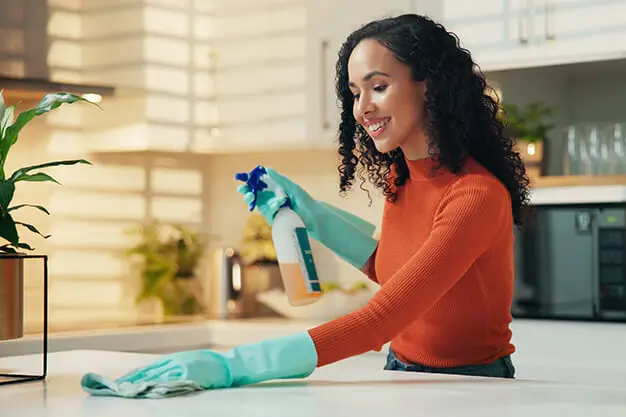
Cleaning removes dirt, dust, and debris from surfaces with water and detergent. While it does not kill germs, it reduces their numbers by washing them away. Deep cleaning is the foundation of both sanitizing and disinfecting, because germs can hide beneath grime and organic matter.
Sanitizing
Sanitizing lowers the number of germs to levels considered safe by public health standards. It is commonly used on food-contact surfaces, children’s items, and laundry that doesn’t require heavy chemical treatment. Sanitizing cleaning is ideal for everyday use where reducing bacteria is sufficient.
In laundry care, using additives or solutions like a Beer Clean Sanitizer helps neutralize odor-causing bacteria in clothes and linens without damaging fabrics. This makes sanitizing suitable for regular loads, towels, and bedding used daily.
Disinfecting
Disinfecting destroys a wider range of harmful microorganisms, including viruses and fungi. It relies on stronger chemicals and is necessary in higher-risk situations. The practice of disinfecting cleaning is paramount following an illness, in shared restrooms, and even more so in healthcare-associated environments.
As such, using a bleach solution to disinfect bathroom surfaces helps destroy lingering germs that sanitizing may not eliminate. Disinfection provides the highest assurance that a surface is safe when health risks are present.
Why Sanitizing and Disinfecting Matter for Your Space
Choosing between sanitizing vs. disinfecting affects not only cleanliness but also health outcomes. Using the wrong method can either leave germs behind or unnecessarily expose surfaces and people to harsh chemicals. Matching the method to the space ensures safer, more effective results.
Different environments have different needs, from busy commercial areas to family homes. Understanding these differences helps create cleaning routines that are both practical and protective.
Preventing Illness in High-Traffic Areas
High-traffic spaces like offices, gyms, and retail stores experience constant surface contact. Door handles, counters, and shared equipment can quickly become germ hotspots. Disinfecting cleaning in these areas reduces the risk of illness spreading between people.
Routine sanitizing may handle day-to-day bacteria, but during flu season or outbreaks, disinfection becomes essential. This layered approach helps protect employees, customers, and visitors alike.
Special Considerations for Family Spaces
Homes with children, older family members, or pets need balanced cleaning routines. Sanitizing cleaning works well for toys, dining tables, and frequently touched surfaces, reducing everyday bacteria without harsh residues.
For carpets and upholstery, a carpet sanitizer is effective for routine freshness, while a carpet disinfectant is recommended after accidents, illness, or pet-related messes. This targeted approach supports healthier living spaces.
When to Sanitize and Disinfect
Knowing when to sanitize and when to disinfect is just as important as knowing how. Overusing disinfectants can damage surfaces and fabrics, while underusing them can leave harmful germs behind. Understanding sanitizing vs. disinfecting helps you apply the right level of care at the right time.
Daily maintenance usually requires sanitizing, while specific events, such as illness or contamination, require disinfecting. This balance protects both health and property.
Common Scenarios to Sanitize
Sanitizing is ideal for routine situations such as after meals, light spills, or regular laundry cycles. It’s commonly used in kitchens, living areas, and bedrooms where reducing bacteria is enough. Cleaning and sanitizing together help maintain freshness and cleanliness without aggressive chemicals.
In laundry rooms, sanitizing is perfect for everyday clothing, towels, and linens. It supports odor control and hygiene while preserving fabric quality over time.
Common Scenarios to Disinfect
Disinfection is necessary after illness, exposure to bodily fluids, or in shared spaces such as bathrooms and locker rooms. This is when disinfecting cleaning becomes critical for stopping germ transmission. You can use products such as Beer Clean Sanitizer as part of your hygiene routine, alongside appropriate disinfectants when higher-level protection is required.
For example, disinfecting floors, toilets, and high-touch surfaces after someone has been sick helps eliminate lingering pathogens, creating a safer environment for others.
Products to Use for Sanitizing and Disinfecting
Using the correct product ensures effective results without unnecessary damage. Products are formulated differently for sanitizing vs. disinfecting, and understanding labels is key to proper use. Here are the types of products commonly recommended by a professional cleaning service.
Sanitizing Products
Sanitizers are designed for frequent use and are generally gentler on surfaces and fabrics. Laundry sanitizers, surface sprays, and specialty solutions like Beer Clean Sanitizer help control bacteria while maintaining material integrity.
These products are ideal for food-contact areas, children’s items, and everyday laundry where full disinfection isn’t required.
Disinfecting Products
Disinfectants contain stronger active ingredients formulated to kill a broad spectrum of germs. They support disinfection and cleaning in high-risk environments, such as bathrooms, healthcare settings, and shared facilities.
These products should be used carefully and according to instructions to ensure safety and effectiveness. Many professional cleaning services in NYC rely on these products because of their proven effectiveness.
If you want more details, you can contact us anytime, and our customer service team will answer your questions.
Tips for Effective Sanitizing and Disinfecting
Proper technique improves results and extends surface life. Understanding sanitizing vs. disinfecting helps you avoid common mistakes and maximize protection.
Tips:
- Always clean surfaces before sanitizing or disinfecting.
- Follow manufacturer instructions for dilution and contact time.
- Use sanitizing cleaning for daily maintenance.
- Reserve disinfecting cleaning for high-risk situations.
- Test products on delicate fabrics and surfaces first.
FAQs - sanitizing vs. disinfecting
What is the difference between sanitizing and disinfecting?
Sanitizing reduces germs to safe levels, while disinfecting kills a broader range of harmful microorganisms.
Should you disinfect or sanitize first?
Always clean first, then sanitize or disinfect depending on the level of risk and exposure.
Does vinegar sanitize or disinfect?
Vinegar may help with basic cleaning, but it does not reliably sanitize or disinfect surfaces.
Conclusion
Understanding sanitizing vs. disinfecting allows you to maintain healthier, safer spaces without unnecessary effort or chemical use. Sanitizing supports daily cleanliness, while disinfecting provides essential protection during higher-risk situations. From routine laundry care to carpets and shared spaces, choosing the right method ensures effective hygiene and surface longevity.
By applying proper techniques, using the right products, and recognizing when each method is needed, you can create environments that are truly clean, and not just visually tidy.